
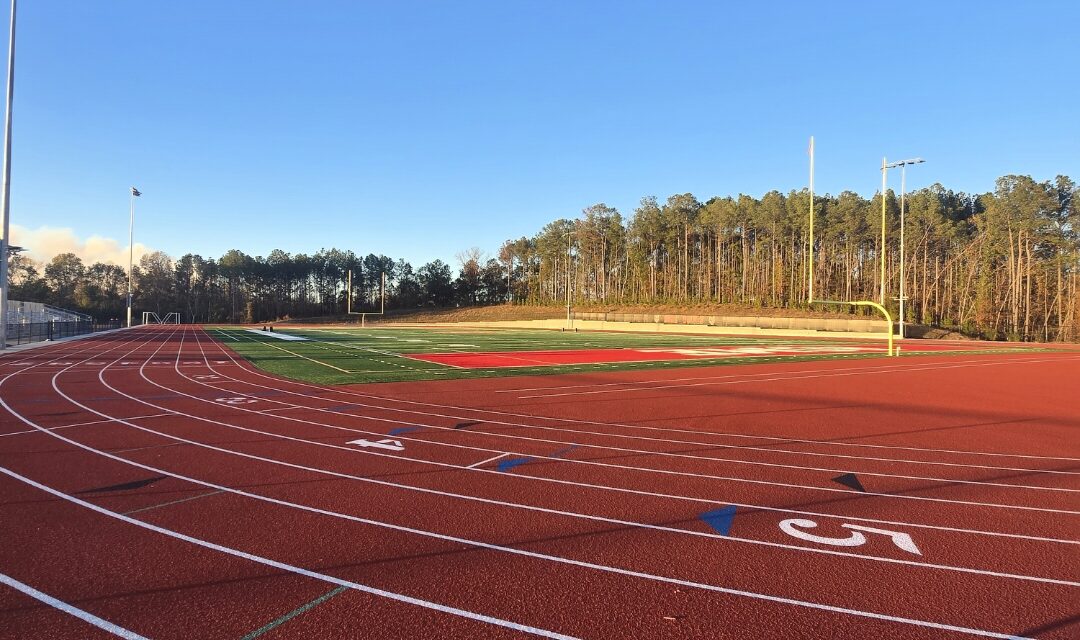



Rome City Schools spent more than $3 million constructing a new football stadium at Rome Middle School, but student-athletes were unable to play games on the field this past season, raising questions about how taxpayer money was spent and whether key budget cuts undermined the project’s original purpose.


Records show the district spent $3,095,302.65 on the stadium project, including $1,974,050 dedicated to the artificial turf field itself. The project was initially budgeted at approximately $3.65 million before cost reductions were made.
Among the items removed from the original plans was a press box, a change that saved roughly $110,000. While eliminating the press box helped reduce construction costs, the decision has had a significant consequence: the stadium cannot currently host football games and is limited to practice use.
For many residents, the situation raises concerns about value for taxpayers. More than $3 million was invested in a facility intended to serve student-athletes and the community, yet the field cannot be used for its primary purpose of hosting competition.
The largest portion of the project was spent on the athletic field itself, accounting for nearly two-thirds of the overall project cost. Despite that investment, the absence of infrastructure needed to meet game-day requirements has left the facility unable to stage football contests.
The project highlights the difficult balancing act school districts often face when construction costs rise and budgets tighten. While officials reduced the project from its original $3.65 million budget in an effort to control expenses, critics may question whether the savings justified the resulting limitations.
A comparison of the figures shows the district reduced spending by roughly $555,000 from the original budget. However, the $110,000 cut for the press box represents a small fraction of the overall project cost, leading some taxpayers to wonder whether additional funding should have been secured to ensure the facility could be fully utilized.
The outcome is a stadium that provides practice space for student-athletes but cannot currently host the games it was designed to support. As a result, taxpayers have funded a multimillion-dollar athletic complex that can only be used for practice and classroom activities.
Questions about whether additional expenditures will be required to make the stadium game-ready and when, or if, games will eventually be played there are likely to remain points of interest for taxpayers and parents alike.
For now, the district’s more than $3 million investment stands as a facility primarily used for practice, despite being built as a football stadium.