
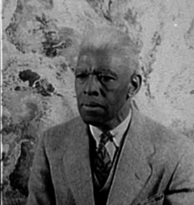



The City of Rome’s General Administration Committee voted Thursday to move forward with an exhibit honoring the life and accomplishments of legendary Rome-born singer Roland Hayes, while stopping short of issuing a formal apology requested by a local resident.


The committee met August 6 in the Carnegie Training Room to discuss a request from Russell McClanahan concerning an incident involving Hayes and the Rome Police Department in July 1942.
Chairman Commissioner Craig McDaniel presented committee members with a collection of newspaper articles detailing the incident and Hayes’ life. McDaniel also read an article published in the July 17, 1942, edition of The New York Times that reported on the incident.
McClanahan’s request called on the City of Rome to formally acknowledge what he described as a wrong committed against the Hayes family by Rome police and issue a written apology. The request called for the apology to be presented to the family by the Rome police chief.
Commissioner Wayne Robinson asked McDaniel to clarify the specific request before the committee.
The committee then discussed the historical incident and the available documentation at length. McDaniel and Robinson expressed support for the city acknowledging the 1942 event, but neither supported issuing a formal apology at this time.
Both commissioners cited conflicting accounts of what occurred and what they described as insufficient documentation establishing wrongdoing by Rome police during the incident.
Mayor Jim Bojo and Commissioner Jill Fisher also participated in portions of the discussion after being asked by McDaniel for their input.
Rather than issuing an apology, Robinson made a motion for the City Manager’s Office to work with the Rome Area History Museum to develop an exhibit dedicated to Hayes’ life and accomplishments.
McDaniel seconded the motion.
The motion was unanimously approved.
Commissioner Bill Collins left the meeting before the motion and vote because of a prior engagement.
The decision provides a way for the city to recognize Hayes’ legacy and the historical significance of the 1942 incident without formally accepting responsibility for alleged wrongdoing by the Rome Police Department.
Hayes, who was born in Rome in 1887, went on to become one of the most celebrated African American classical singers of his generation, performing internationally and receiving widespread recognition for his talent.
The proposed museum exhibit is expected to focus on Hayes’ life, career and accomplishments while providing an opportunity to educate the public about his connection to Rome and the events surrounding his 1942 return to the city
According to historical accounts, Hayes was in Rome with his wife, Helen, and daughter, when he was arrested and reportedly beaten by Rome police after an altercation involving his daughter and a police officer.
Hayes himself went on to have a remarkable career. He became one of the first internationally recognized Black American concert singers, performing throughout the United States and Europe and helping break racial barriers in classical music.
He died in 1967 at the age of 80.