
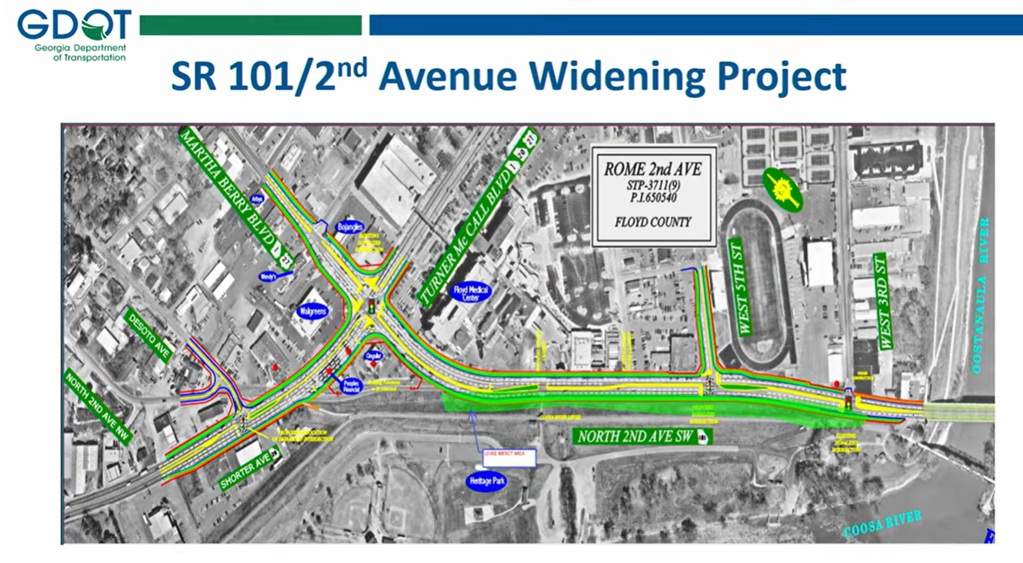



Progress on the long-awaited Second Avenue widening project remains on hold as engineers work through a series of unexpected underground utility conflicts that have delayed construction by nearly a year. Officials with the Georgia Department of Transportation (GDOT) provided an update to the Rome City Commission on Monday, explaining why work has stalled and outlining a revised timeline for completion.


According to GDOT representatives, the project is currently 328 calendar days behind schedule, with construction paused for several weeks due to complications involving sewer lines, storm drainage systems, and other underground infrastructure that were either improperly documented or not identified in earlier planning stages.
Jordan Clement, GDOT District Construction Manager, said crews encountered multiple unexpected obstacles once excavation began.
Among the issues were sewer mains found in locations that did not match project plans, unidentified storm drains tied into existing systems, and a major force sewer main discovered directly in the planned roadway. After the City of Rome relocated part of that sewer line, engineers found additional conflicts involving a sheet pile wall, requiring further redesign and approval from the U.S. Army Corps of Engineers.
GDOT officials said the extensive redesign work has prevented contractors from moving forward. “The main reason work has stopped is because of drainage issues and the need to redesign around water lines as they are discovered,” said Joel Dillingham, GDOT District 6 Area 4 Manager. “Until those plans are finalized, the contractor cannot resume construction.”
Officials estimate the redesign process will take another month and a half to complete. Once updated plans are approved, construction is expected to resume.
The project, originally scheduled for completion in October of this year, now has a projected finish date of September 2027.
The Second Avenue widening project is intended to improve traffic flow and safety in one of Rome’s busiest corridors, but the delays mean residents and commuters can expect ongoing disruptions for much longer than originally planned.